
Giving Existing Structures a New Life
As towns and cities continue to evolve, projects like Mountbatten House explore how existing civic structures can be adapted and reimagined rather than simply replaced.
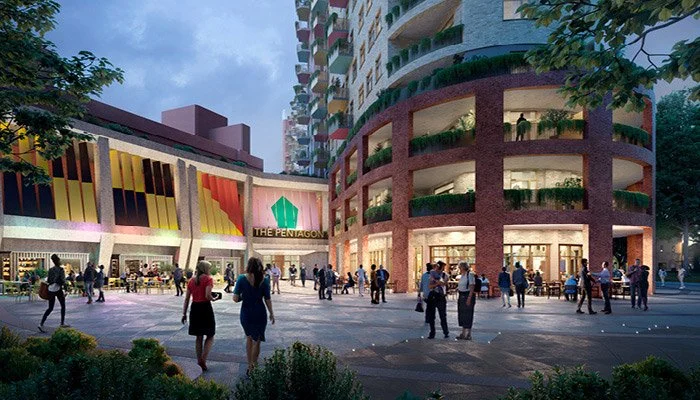
Mountbatten House has long occupied a prominent place within Chatham’s townscape. Originally built as a civic and transport hub, the building – together with the adjacent former bus station – forms part of the area’s post-war architectural identity and collective memory.
Today, design work continues on the transformation of the site into a new residential-led development, creating 164 apartments while carefully reconsidering how the retained structures can support a new phase of life and use.
Rethinking what already exists
Across many towns and cities, post-war civic structures are often viewed as obstacles to redevelopment rather than opportunities for adaptation. Yet many of these buildings still hold a strong physical presence, embedded infrastructure and an important connection to local identity.
At Mountbatten House, the ambition has been not simply to replace what exists, but to rework and reimagine it. Alongside the retained tower, proposals for the adjacent former bus station introduce a new architectural wrap around the existing concrete frame, helping to establish a renewed civic presence while preserving elements of the site’s original character.
The approach reflects a wider shift in thinking around regeneration – recognising that reuse and adaptation can often create places with greater continuity, texture and long-term value than wholesale replacement alone.
A new chapter for the site
While the project introduces a significant new residential offer for Chatham, it also aims to retain a sense of familiarity within the evolving town centre.
Existing buildings often carry layers of memory and association that newer developments can struggle to recreate. Retaining and transforming parts of these structures allows places to evolve more gradually, helping new uses emerge without entirely erasing what came before.
As work on the project continues, Mountbatten House represents an ongoing exploration of how architecture can support renewal while remaining connected to the identity of the place itself.
“Reuse and adaptation can often create places with greater continuity and long-term value than replacement alone.”
Written by Neil Young.