
Expertise: Design & Technical Advisory

Innovative approaches and deep expertise that drive genuine architectural advances

True innovation isn’t superficial – it requires, experience, deep research, curiosity and the confidence to embrace new ways of thinking.
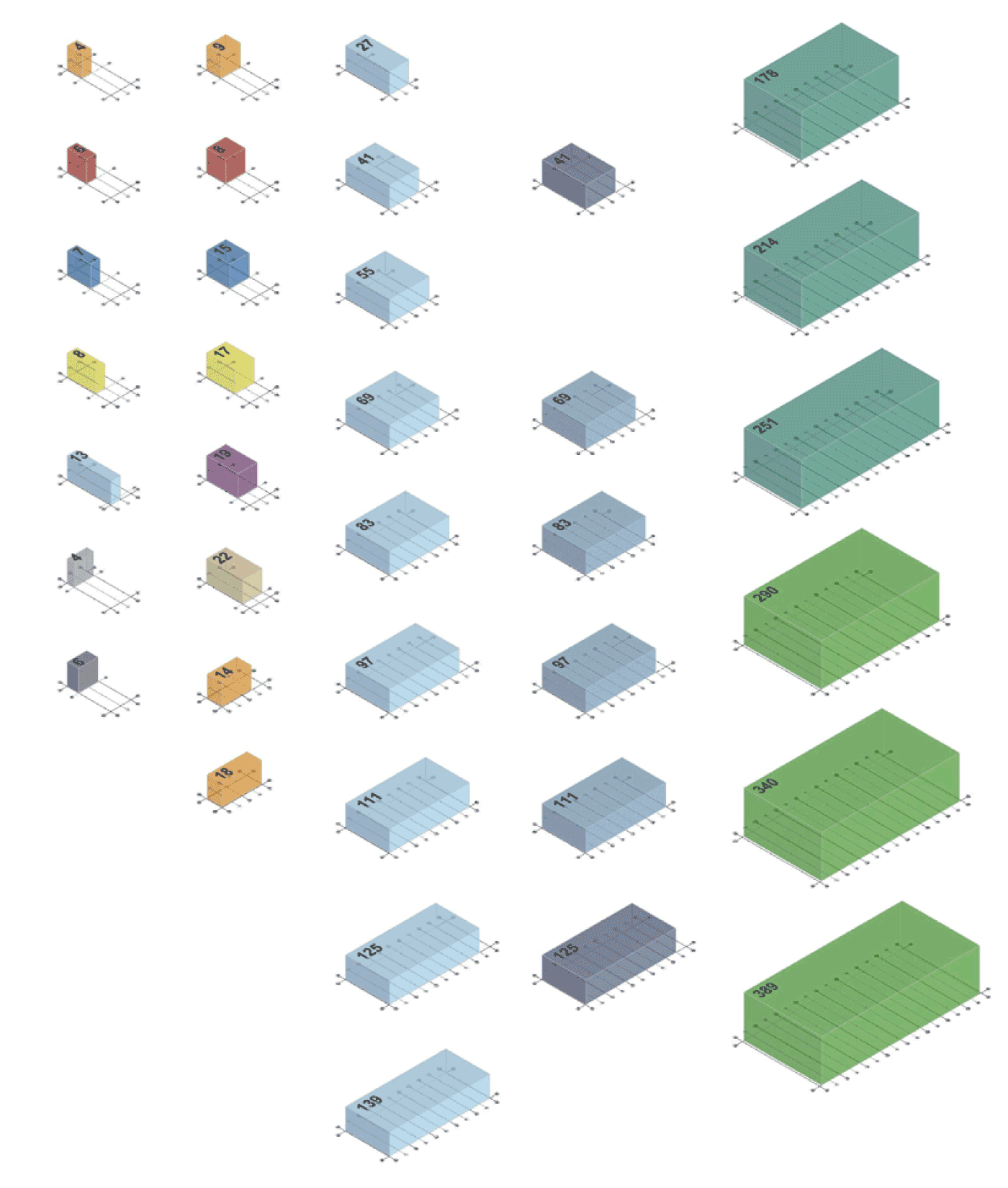
Our approach to Research & Development goes beyond the conventional boundaries of architectural practice. We continuously explore new methods, technologies, and materials, driven by an ambition to push the industry forward and improve how buildings are conceived, constructed, and experienced.
Drawing from extensive involvement in high-profile, government-funded R&D projects, our unique experience has led us to develop an adaptable working methodology that is highly suited to research-based projects. This approach allows us to rigorously test, refine, and deliver innovative solutions that are both visionary and practical. Our process is fluid, so we can accept new ideas and run with new opportunities at any stage, but also focused, to ensure a workable outcome delivered to programme.
Our R&D spans every scale—from understanding broader user needs and site contexts to fine-tuning technical details and construction processes. It's not just about selecting new materials; it's about embedding innovation deeply into every aspect of building design.
Our approach to innovation includes:
Design for Manufacture (DfMA)
DfMA reduces waste, improves efficiency, and enhances quality. It demands a precise understanding of how buildings can be tailored to factory manufacturing and assembly processes, including volumetric modular, panellised, and component-based construction.
Education Sandpit
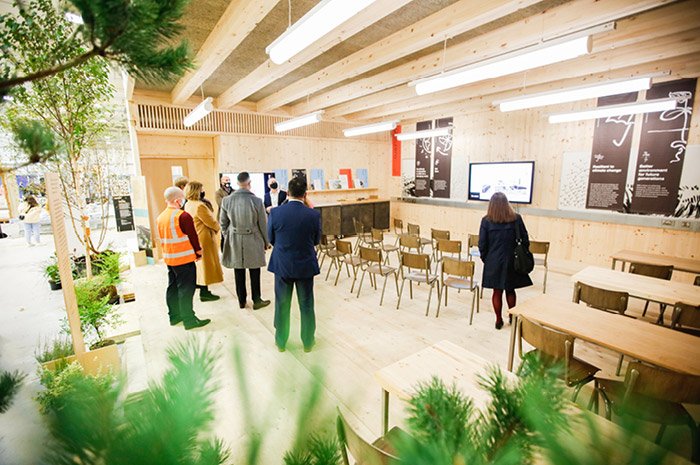
In our Education Sandpit project at Coventry’s Manufacturing Technology Centre, we successfully combined an innovative timber-panelled activity hall with volumetric modular service and circulation areas. This demonstrated how large-scale, factory-manufactured components from different suppliers can be seamlessly integrated, extracting maximum efficiency and the highest quality from every component.
Low Carbon Design
Sustainability means designing buildings holistically, with a clear focus on fabric-first principles, lean design and construction methods, and low-carbon technologies. We combine user-centred design with technical precision to achieve the lowest possible carbon outcomes – during construction, occupation, and throughout the building’s lifespan.
COP 26 Prototype Classroom
Our Prototype Classroom for COP26, developed with the Department for Education, showcases this approach. Using an innovative bespoke timber-based panellised component system, it achieved an ultra-low carbon footprint, demonstrating significantly reduced timber usage compared to typical CLT (Cross Laminated Timber) construction.
[Pic here TBC]
Quote here TBC.
Biophilic Design
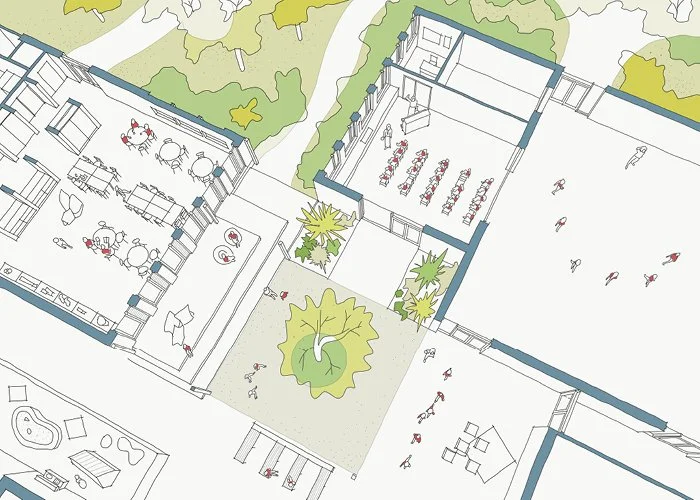
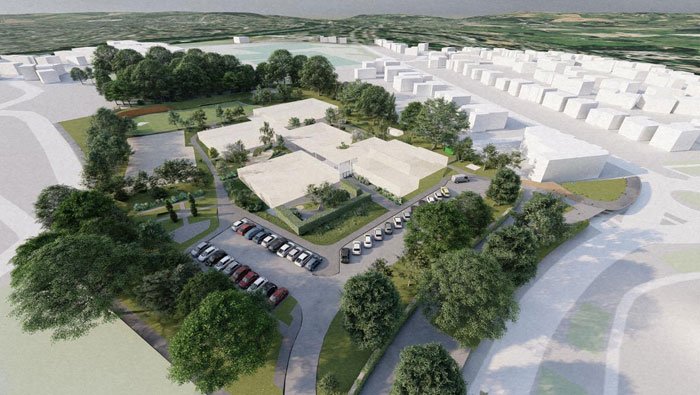
Biophilic design is about more than simply adding greenery – it's about creating meaningful connections to nature that enhance wellbeing and performance. We design spaces that integrate natural materials and patterns, carefully embed buildings within protective landscapes, and maximise visual connections to nature from within.
St Mary’s Biophilic Primary School
Our groundbreaking concept design for St Mary’s Biophilic Primary School in Derby established new benchmarks, informing the Department for Education’s biophilic design brief. Taking lessons from our GenZero project, we developed a school where buildings and landscaping combine seamlessly, providing significant health and learning benefits to pupils and staff alike.
Standardisation
Effective standardisation requires a detailed understanding of user requirements, combined with practical insights into manufacturing processes and construction technologies. It’s a strategic approach that simplifies construction, improves quality, and significantly reduces waste.
Department for Education Collaboration
Our ongoing collaboration with the Department for Education has enabled us to develop flexible, standardised space guidelines now implemented across new schools in England and Wales. Our comprehensive Building Performance Evaluation research supports this work, ensuring spaces are highly adaptable and responsive to user needs and has led to unique insights that allow us develop sustainable accommodation for any building type.
Cambridge NetZero
For NetZero Buildings in Cambridge, we refined their Schoolhaus accommodation into clearly defined, repeatable space types, dramatically reducing the number of components required. This significantly enhanced production efficiency, lowered costs, and improved build quality.
Timber Construction
Timber is more than just sustainable – it’s transformative. Offering both renewable sourcing and significant carbon storage capabilities, timber construction has enormous potential to reshape the industry.
GenZero Project
Through our GenZero project for the Department for Education, we led extensive research into advanced timber systems, even testing some components at Cambridge University’s Engineering labs. This helped pioneer lean timber construction approaches, reducing reliance on carbon-intensive materials like plasterboard, while enhancing efficiency and maximising timber’s natural aesthetic qualities.
NetZero Schoolhaus
Our work on NetZero Buildings’ Multi-storey Schoolhaus further illustrates our expertise. We developed a robust timber-panel system capable of supporting multi-storey construction and withstanding the demands of transportation and assembly. This innovation helped secure NetZero’s leading position on the Department for Education’s Modular Framework.
Post-Occupancy Evaluation
Continuous learning is central to our R&D philosophy. Understanding how buildings perform in reality – what works well and what can be improved – fuels genuine innovation.
Department for Education
Our pioneering Post-Occupancy Evaluation methodology for the Department for Education involved detailed studies of over 75 schools nationwide. This has given us unique and invaluable insights into everything from user wellbeing to detailed technical performance. Based on this work, we developed the Department’s Building Performance Evaluation template, now a standard tool for assessing educational buildings nationwide.
[Pic here TBC]
Quote here TBC.